
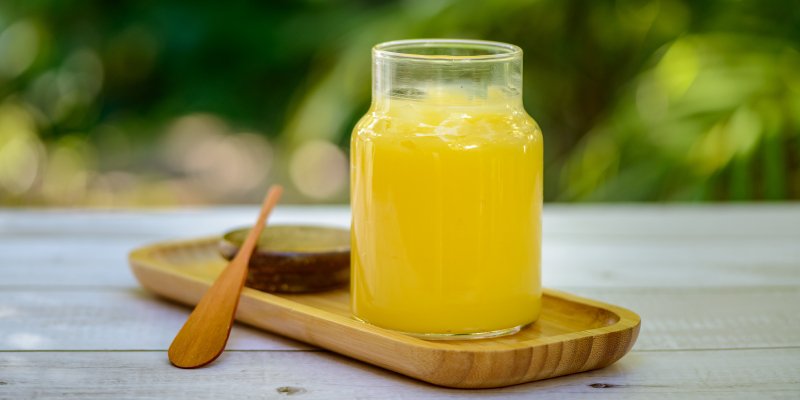
Ghee is not just a cooking fat in India — it is a cultural institution. From religious rituals to everyday cooking to the craft of sweet-making, ghee occupies a position no other ingredient holds. Understanding why reveals something fundamental about Indian food values.
The Religious and Cultural Significance
In Hindu tradition, cow ghee is considered sattvic — pure and spiritually elevating. It fuels the temple lamp (diya), is poured into the sacred fire (havan), and is the mandatory cooking fat for prasad and religious offerings. No other cooking fat carries this spiritual weight. This reverence is not arbitrary — it reflects a deep cultural understanding that ghee represents purity, prosperity, and care.
Ghee in Ayurvedic Tradition
Ayurveda, India's ancient medical system, classifies ghee as a rasayana — a rejuvenating substance. Traditional Ayurvedic uses include:
- Digestive aid — Ghee stimulates the secretion of stomach acids, aiding digestion.
- Nutrient carrier — Ghee is fat-soluble, meaning it helps the body absorb vitamins A, D, E, and K from food.
- Anti-inflammatory — Butyric acid in ghee has documented anti-inflammatory properties.
- Skin and joint health — Traditionally applied topically and consumed for lubrication and moisturisation.
The Kitchen Workhorse
Beyond ritual and medicine, ghee is India's most versatile cooking fat:
- High smoke point (250°C) — Unlike butter or most oils, ghee does not burn easily. This makes it ideal for deep frying, tempering (tadka), and high-heat cooking.
- Flavour amplifier — Ghee carries and enhances the flavours of spices, making it the preferred medium for tempering cumin, mustard seeds, and curry leaves.
- Natural preservative — Ghee does not require refrigeration and has antimicrobial properties that extend shelf life.
Ghee in Sweet-Making: The Non-Negotiable Standard
In Indian sweets, ghee is not an option — it is the standard against which everything is measured. Every Lynk sweet uses Pure Cow Ghee because substitution is not a compromise we make:
- Mysore Pak — Nearly 50% ghee by weight. The melt is entirely ghee-dependent.
- Besan Ladoo — Gram flour roasted in ghee develops its signature nutty flavour.
- Motichoor Ladoo — Boondi fried in ghee carries the aroma in every pearl.
- Kaju Katli — Ghee binds the cashew paste and determines the mouthfeel.
How to Choose Good Ghee
- Source — Cow's milk ghee (not buffalo) is the traditional standard. Look for "cow ghee" specifically.
- Method — Bilona (traditional churning) produces a granular texture and deeper flavour than industrial centrifuge methods.
- Colour — Golden yellow, not pale white (buffalo) or artificially bright.
- Aroma — Warm, nutty, distinctly dairy. No chemical or neutral smell.
- Texture when cool — Should be slightly granular, not smooth like margarine.
Our Pure Cow Ghee is available in the Ghee collection — traditionally processed, single-source cow's milk.
The Economic Reality
Ghee costs more than vegetable oil — significantly more. Approximately 25 litres of milk produces 1 kg of ghee through traditional methods. This yield ratio explains both the cost and the value. When a sweet uses pure ghee, you are paying for real dairy in a real quantity. When it uses vegetable oil, you are paying less — but receiving a fundamentally different product.
Frequently Asked Questions
Is ghee healthy?
Ghee is rich in fat-soluble vitamins (A, D, E, K), butyric acid (anti-inflammatory), and CLA (conjugated linoleic acid). In moderation, it is a nutrient-dense cooking fat with a long Ayurvedic tradition of health benefits.
How long does ghee last?
Properly stored pure cow ghee lasts 6–12 months at room temperature. It does not require refrigeration. Keep it dry and sealed — moisture is the main spoilage risk.
What is the difference between ghee and clarified butter?
They are very similar. Ghee is cooked slightly longer than clarified butter, causing the milk solids to brown before removal. This gives ghee its characteristic nutty flavour and darker golden colour.
Why is Indian ghee special?
Indian ghee is traditionally made via the bilona method — curd is hand-churned to butter, then slow-heated. This produces a more complex flavour than industrial methods. The cultural and Ayurvedic tradition adds another layer of intentionality to its production.